?
Reference: 1 m01 Compare
Read the reference size and the dimension in the question. Compare that span with the light shape.
Ordinary form · Artwork top-to-bottom in this pose · nominal character height
GET A FEEL FOR IT
Size It Up Pop Culture on Sizes.games: Put familiar Pokémon, Star Wars and Sonic characters beside one another and test your sense of their scale. Each round compares a published, listed height for the named character or form. Read the scope, resize the target against the known reference, then check the reveal. Pop Culture has a five-round Daily game and new five-round games in Unlimited.
Read the reference size and the dimension in the question. Compare that span with the light shape.
Drag the light shape, its handle or the ruler until the proportion looks right. Use − and + to fine-tune.
Click Lock in to see the actual outline, size and score. Complete five rounds for your total.
The diagrams use invented teaching values, separate from every Daily puzzle.
Choose a daily challenge or keep practising. Both use five rounds and the same scoring rules.
One fixed set of five comparisons for each category and local calendar date. The next Daily arrives at midnight in your local time zone. When you finish, your result stays locked in this browser.
Play DailyNew five-round games with no daily limit. Keep the current category, practise with new pairs, and start another game after the result. An unfinished run can resume here when browser storage is available.
Play UnlimitedThese are teaching ratios, not measurements of objects in today’s game.
Use the published height for the named character or form. An upright pose, a raised hand or an antenna does not independently establish that reference value.
Keep the same proportional reasoning when a character is smaller. The illustrative outline helps you recognise the subject; the stated height defines the measurement.
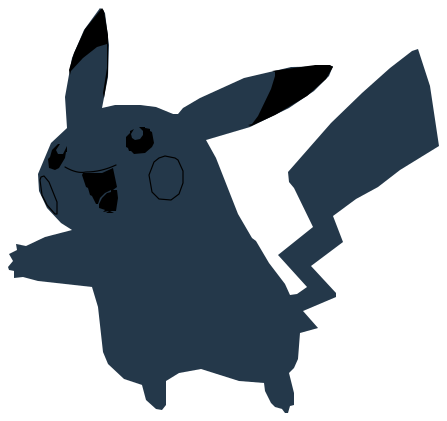
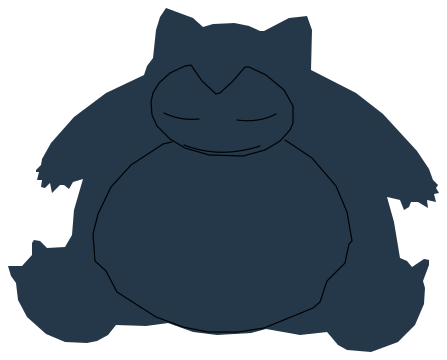
The category currently contains 40 characters from Pokémon, Star Wars and Sonic. These eight introduce its mix of small creatures, larger Pokémon, film characters and game characters. The round’s scope gives the form or height convention being used.
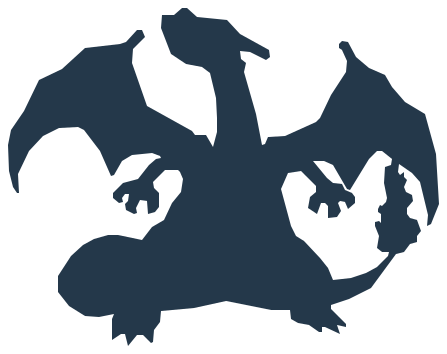




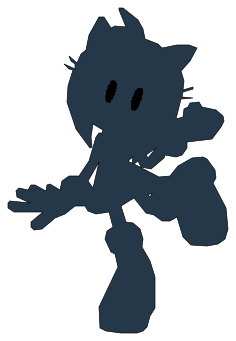
A character name alone may leave the measurement unclear. Follow the named form or convention instead of substituting another portrayal.
Artwork is illustrative. A crouch, limb, tail or antenna is a recognisable feature, not proof of an exact body measurement. The listed reference is what counts.
Each guess earns a base score from 0 to 100 by comparing your estimate with the stated reference size. The closer the ratio is to 1, the higher the score. Half-size and double-size guesses earn the same base score.
For example, 80 base points in a ×3 round contribute 240 points. Five perfect rounds total 1,000.
| Ratio | Base points |
|---|---|
| 0.5× | 50 / 100 |
| 1× | 100 / 100 |
| 2× | 50 / 100 |
Character sizes use published nominal heights for the stated form or convention. They are reference values, rather than measurements inferred from every pose in a film or illustration. Artwork preserves a recognisable silhouette, but limbs, antennae and posture do not establish an exact body measurement. Read the question’s scope; scores compare your estimate with the listed height named for that round.
Yes. Choose Pop Culture Unlimited for new five-round games from this character category. Your completed Daily result stays separate in this browser when storage is available.
No. Progress is saved locally when browser storage is available. Return to the same category and mode to resume; another browser or device has its own progress.
Use the form and measurement convention stated in the round. Do not replace the supplied reference with a different adaptation, transformation or portrayal simply because the character has the same name.
The drawing is illustrative. Raised arms, antennae, crouching and other pose details do not all define the published height. The game compares against the stated nominal reference, rather than treating every visible point as an exact measurement.
No. They are published nominal references for fictional subjects. Sources and scope identify the basis used here; artwork should not be mistaken for a precise physical projection of a real individual.
A Pop Culture game uses two objects from this category. Choose Mixed for compatible comparisons across categories; the same measurement and scale rules still apply.